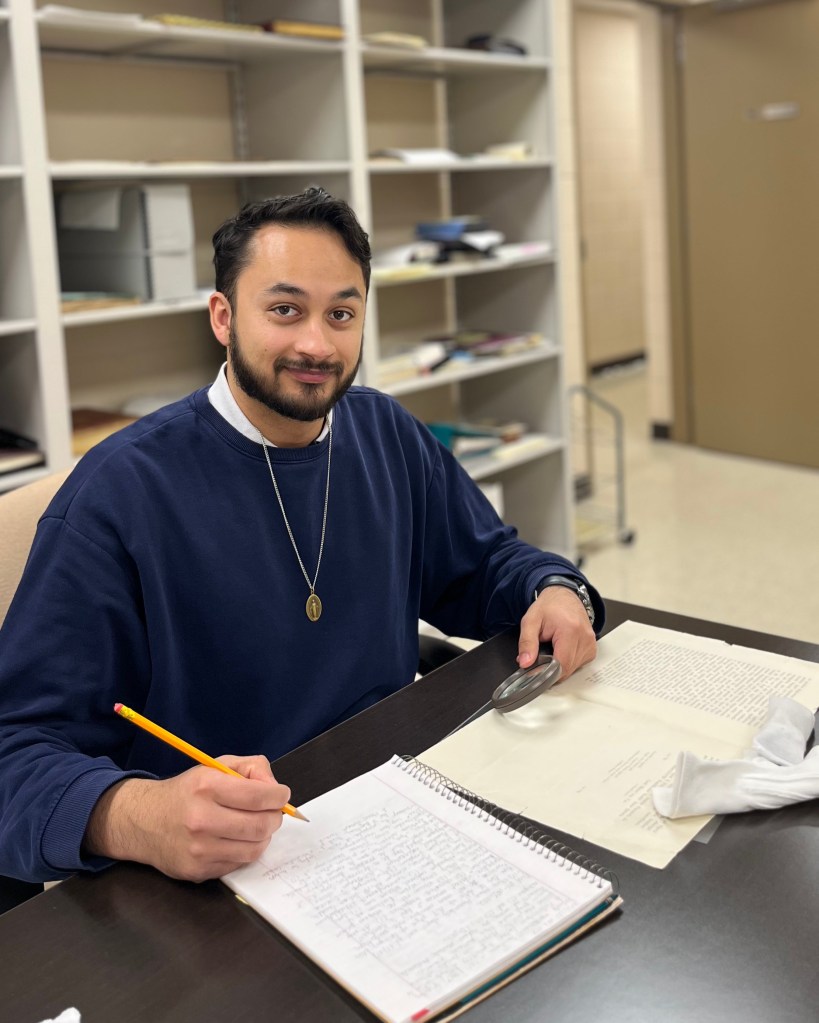
Hello! My name is Mateo Cuellar Rubio and I am the Archives Student Intern of the Bishop Farrell Library & Archives. Over the past four months, I’ve had the privilege of doing my co-op internship here.
I am a student from the University of Waterloo majoring in History. My internships have taken me to several unique positions: a Historical Interpreter at Sainte-Marie among the Hurons, a Donné at the Martyr’s Shrine, a Teacher Assistant at Loyola High School, and a Research Assistant at The Archive of the Jesuits in Canada. While it’s safe to say I move around a lot, I always try to learn as much as possible from my placements, and these four months in Hamilton were truly formative. My supervisor divided my responsibilities between cataloging textual documents and serving as a docent for the Saint John’s Bible, based on my previous archival experience and ability to guide groups.
One of the biggest challenges was how most of the textual documents were written in cursive! I am part of the generation that went through the Ontario education system without learning this penmanship. Within the first week, I began processing some of the archive’s oldest documents (1840s–1900s). Of course, most of them were in cursive. I had to tell the Director of the Bishop Farrell Library & Archives, Dominy Williams, that I literally couldn’t read these letters – but I was determined to learn how to do it! Using a Victorian penmanship chart, a magnifying glass, and a lot of patience, I was slowly able to read these letters.
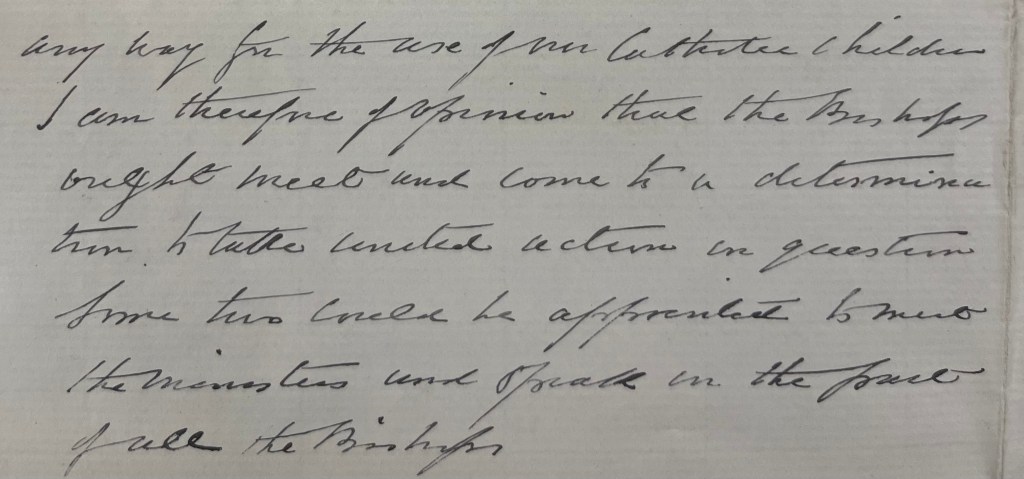
Knowing what it says is one thing, but understanding it is another. At times, the correspondence lacked background information or any clues, halting any research attempts; at other times, there was a foothold to dive into the rich history of Catholicism in Ontario. Such as the controversy over the Ross Bible Program (a provincial government initiative to add Bible study to school classrooms that caused a division between the Catholic Bishops over whether to support it or denounce it), which has only two public resources located in the Canadian Biographies. Using these resources, I was able to understand how the nine correspondences related to each other and why these particular individuals wrote to Bishop Joseph Carbery of Hamilton.
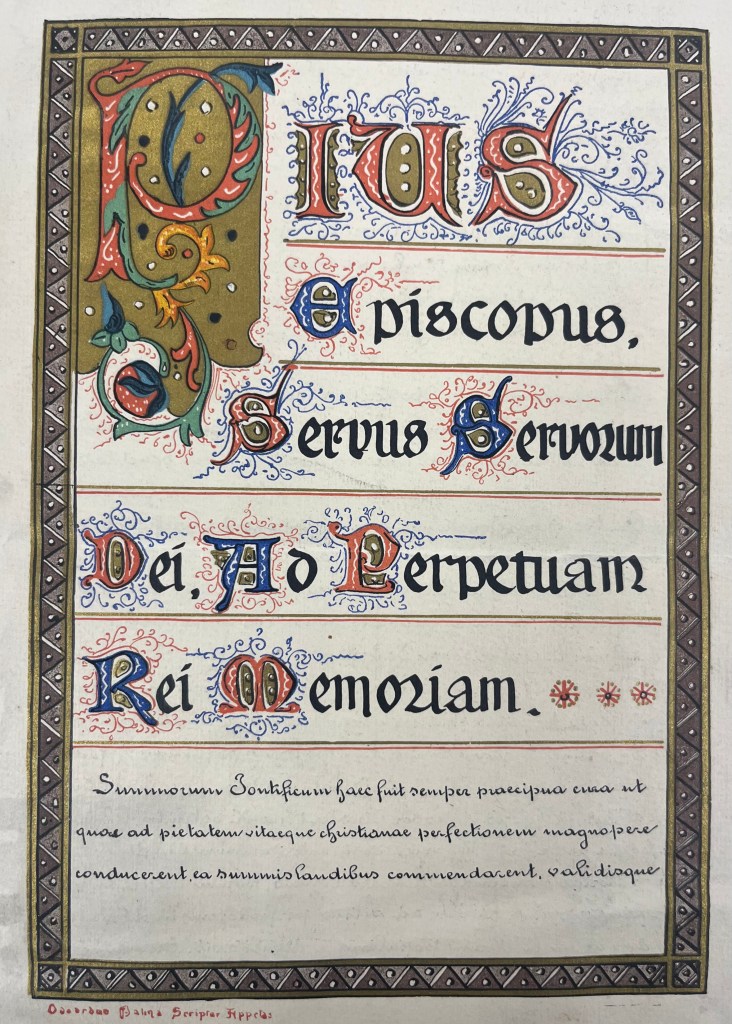
There was also correspondence with the Vatican, written in Latin and in cursive! To read the contents, I would first transcribe the document, then use Latin dictionaries and translations to read it. Safe to say that the process was slow. One of my favourite documents is an illuminated proclamation from Pope Pius XI, seeking to spread the Spiritual Exercises globally. I love this because the art is stunning and how it seeks to promote Ignatian Spirituality among the religious and the laity. I feel a strong connection to this because my spirituality is rooted in Ignatian and Jesuit principles, which made me excited to see this document.
Cataloging some of the oldest documents from the archives has pushed me to face the reality of where I am lacking in my pursuit of becoming a historian. The inability to read cursive and Latin is a major obstacle, especially in my pursuit to learn the history of the Catholic Church in Canada. Being here in the archives also gave me the knowledge to overcome these obstacles and prepare myself for the future.
I spent the other half of my time preparing to deliver The Saint John’s Bible presentation in Spanish at a parish. The parish priest, Father Francisco Cruz, always wanted to have The Saint John’s Bible in his parish but was prevented by a lack of a docent who spoke Spanish. When he found out I was a docent, he insisted that I lead the presentation. Sure, Spanish is my mother tongue, but since I’ve lived most of my life here in Canada, I primarily speak English. I initially declined, but was persuaded to do it because the parishioners would benefit from the viewing, and because I would have a golden opportunity to practice my Spanish.
And so I started translating the specialized words of The Saint John’s Bible into Spanish, shadowing other docents during their presentations, and taking notes on how to interact with people. Thankfully, my parents and friends were willing to support my efforts by revising my script and practicing correct pronunciation.
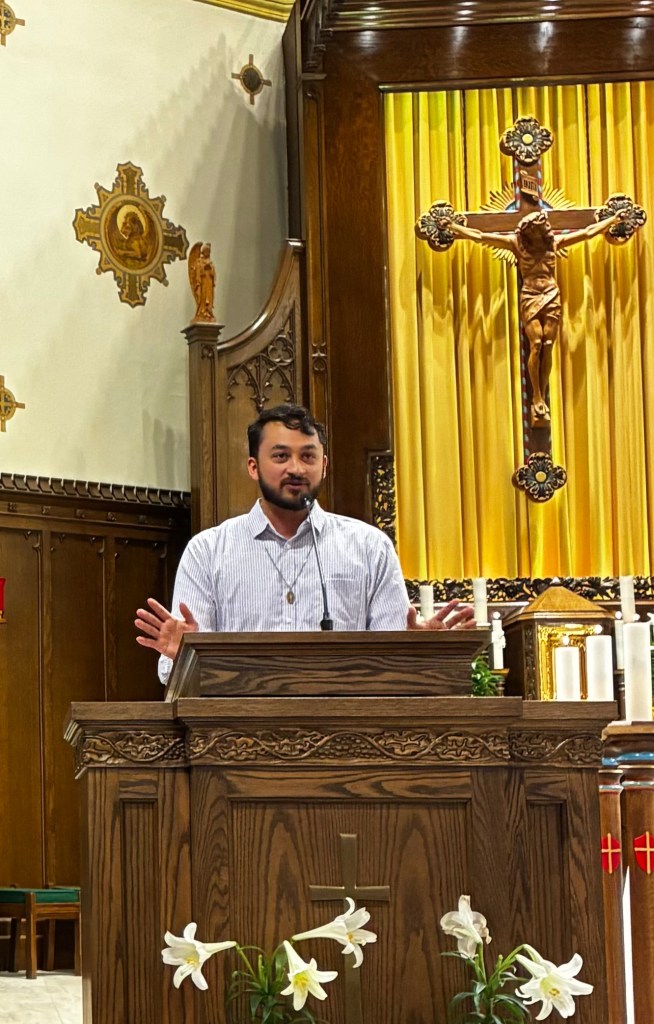
Yes, I was nervous for my two Spanish presentations in front of hundreds of parishioners, but they were incredibly patient with me. For example, during the open viewing of The Saint John’s Bible, I would forget a translation of a word, and the parishioners would say the word aloud for me to repeat. I can truly say that being a docent forced me to improve my Spanish skills and to fall more in love with sacred art.
One aspect that made my time here more interesting was the arrival of the new Bishop of Hamilton, Joseph Dabrowski. There were a lot of changes and movement from behind the scenes, an opportunity that most people would never get to see. And his team, the chancery, are all truly wonderful people. They all welcomed me, and it’s clear they take their jobs seriously. It is great to see and to know that the diocese that I love is in the hands of such capable people!
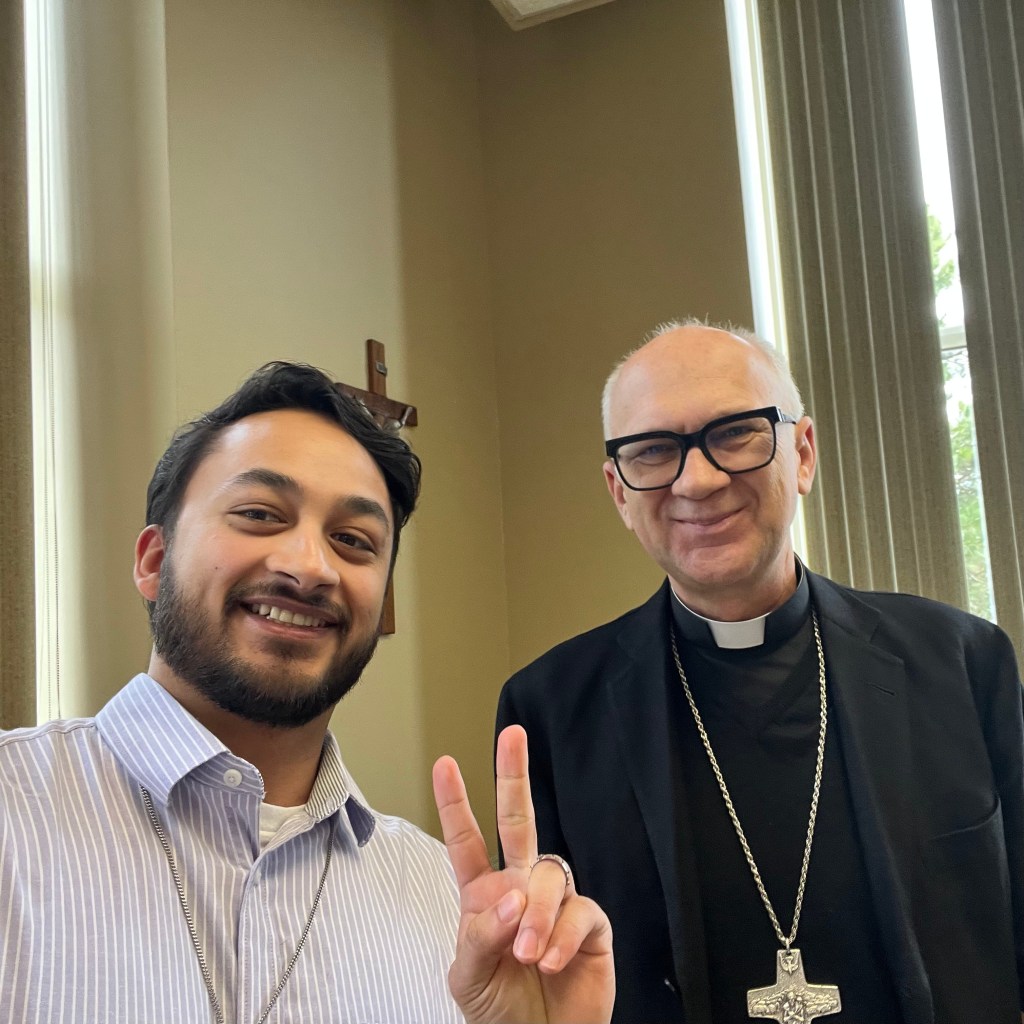
Working at such an amazing place has been a blessing, and I will cherish these months for the rest of my life.
You can learn more about the collections I worked on online:
Or explore The Saint John’s Bible in the Diocese of Hamilton

